By clicking “Accept All Cookies”, you agree to the storing of cookies on your device to enhance site navigation, analyze site usage, and assist in our marketing efforts. View our Privacy Policy for more information.
How to build stronger legs?
Build stronger, more resilient legs by targeting your adductors. Learn how smart strength training improves hip stability, performance, and injury prevention at CrossFit Feel Good.
By
December 15, 2025
.jpg)
Related

Adductors: The Overlooked Key to Strong, Stable Legs
At Feel Good, we prioritise multi-joint movements (Squats, hinge variations deadlift / clean / snatch, lunges, step ups and hip thrusts). We choose these because they incorporate the most amount of muscle, performed through large ranges of motion. This is why programs that focus on these produce amazing results- both in the development of strength, as well as hypertrophy or aesthetics.
The Hidden Gap in Traditional Lower-Body Training
The one small drawback to the above movements is that they don’t optimally target the adductor group (the large amount of muscle on the inside of your leg that most consider your groin) and one could make a case that not including adductor specific work (just like we do glute and hamstring specific work) is insufficient if wanting to optimally develop athleticism or even mitigate the risk of injury.
This muscle group is also extremely important for pelvic floor health and hip stability. Don’t get me wrong, deep squats (below 90 degrees) and walking lunges will hit the adductors, however if the adductors are the sorest muscle group that you experience after leg day or if you’re simply wanting to feel more agile on the playing field, there’s the possibility that you’re leaving some gains/progress on the table.
Most of you will have been in a class where prior to squats and/or lunges, the warm up will have the option of either- Copenhagen Side plank and the lateral Lunge.
These are probably the two most popular movements to bias the adductor group, both in terms of strengthening as well as preserving sufficient flexibility (loading the adductors into a stretched/lengthened position is a powerful way to maintain flexibility).
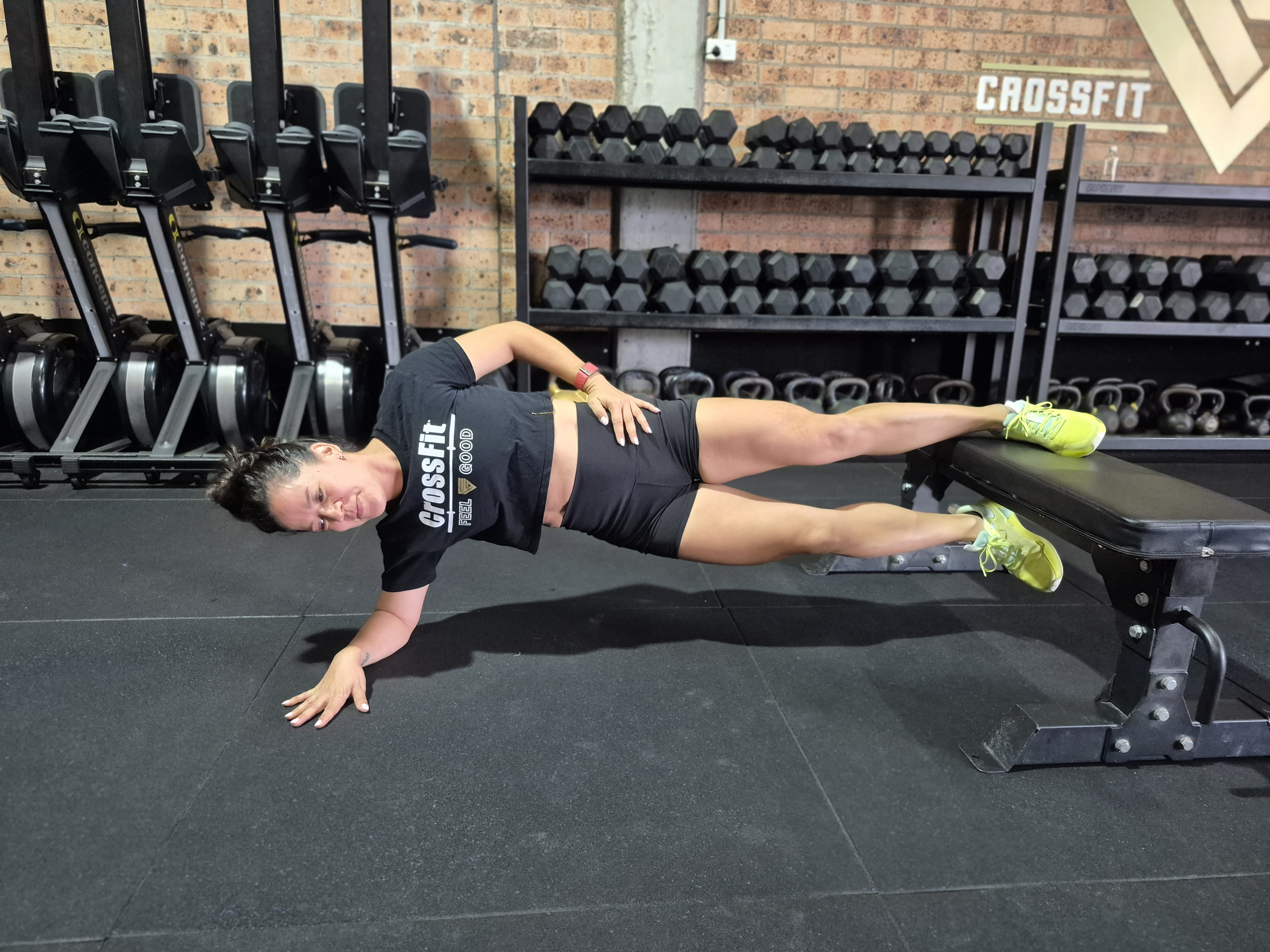
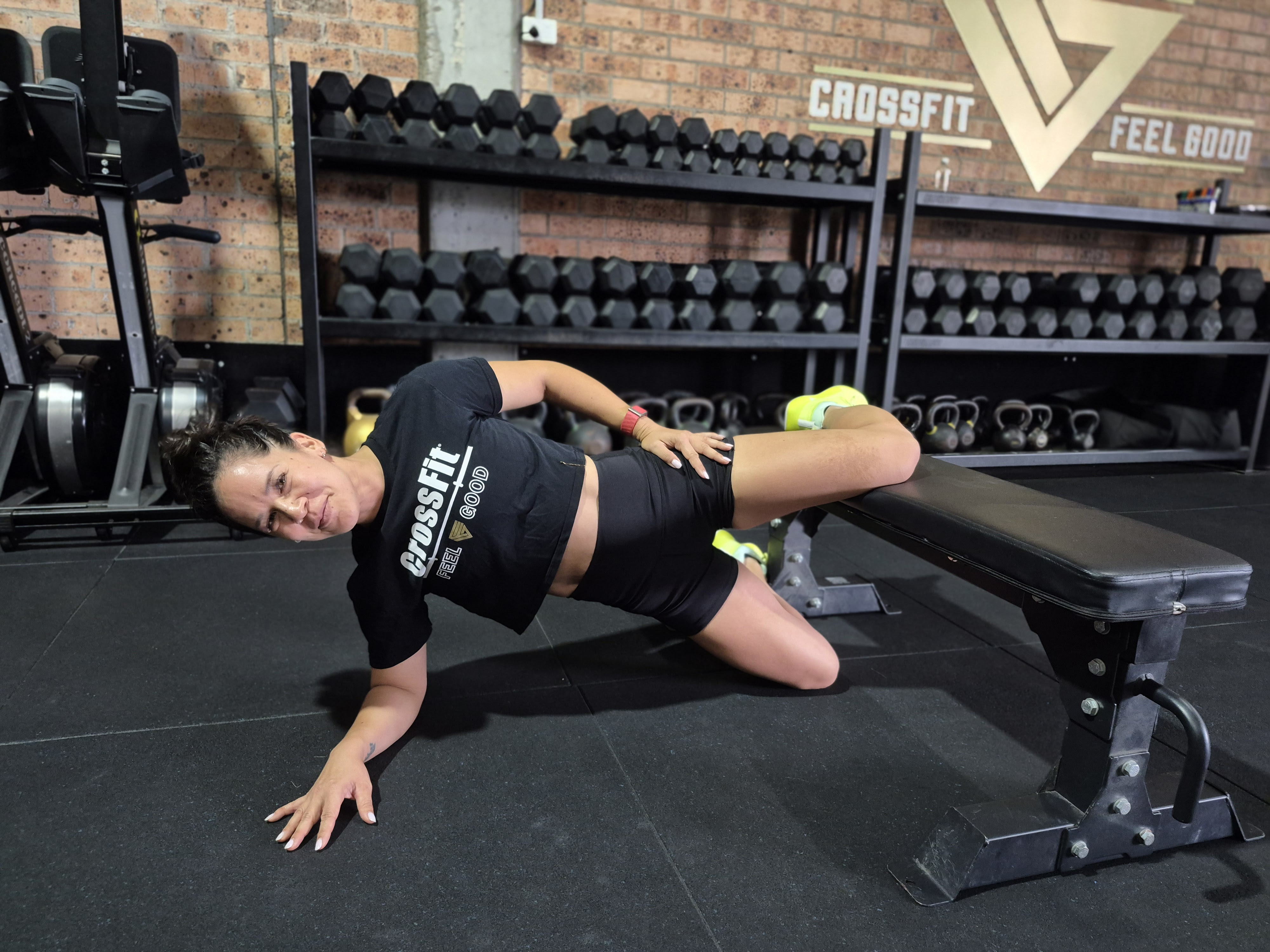
Copenhagen Side Plank
I can appreciate that some members may view the Copenhagen Side plank as quite challenging and full disclosure, the long lever position in the above picture is demanding, but most shouldn’t start there. The knee bent position is a very accessible way to begin working on your adductor strength. Developing confidence in this position will allow for progression towards the straightleg version.
Lateral lunges
What’s not appreciated in the lateral lunge is the amount of ankle mobility required, so if you struggle with balance to get into this position (you either fall back or your heel lifts up)- place a small plate under your heel to ensure a more upright torso.
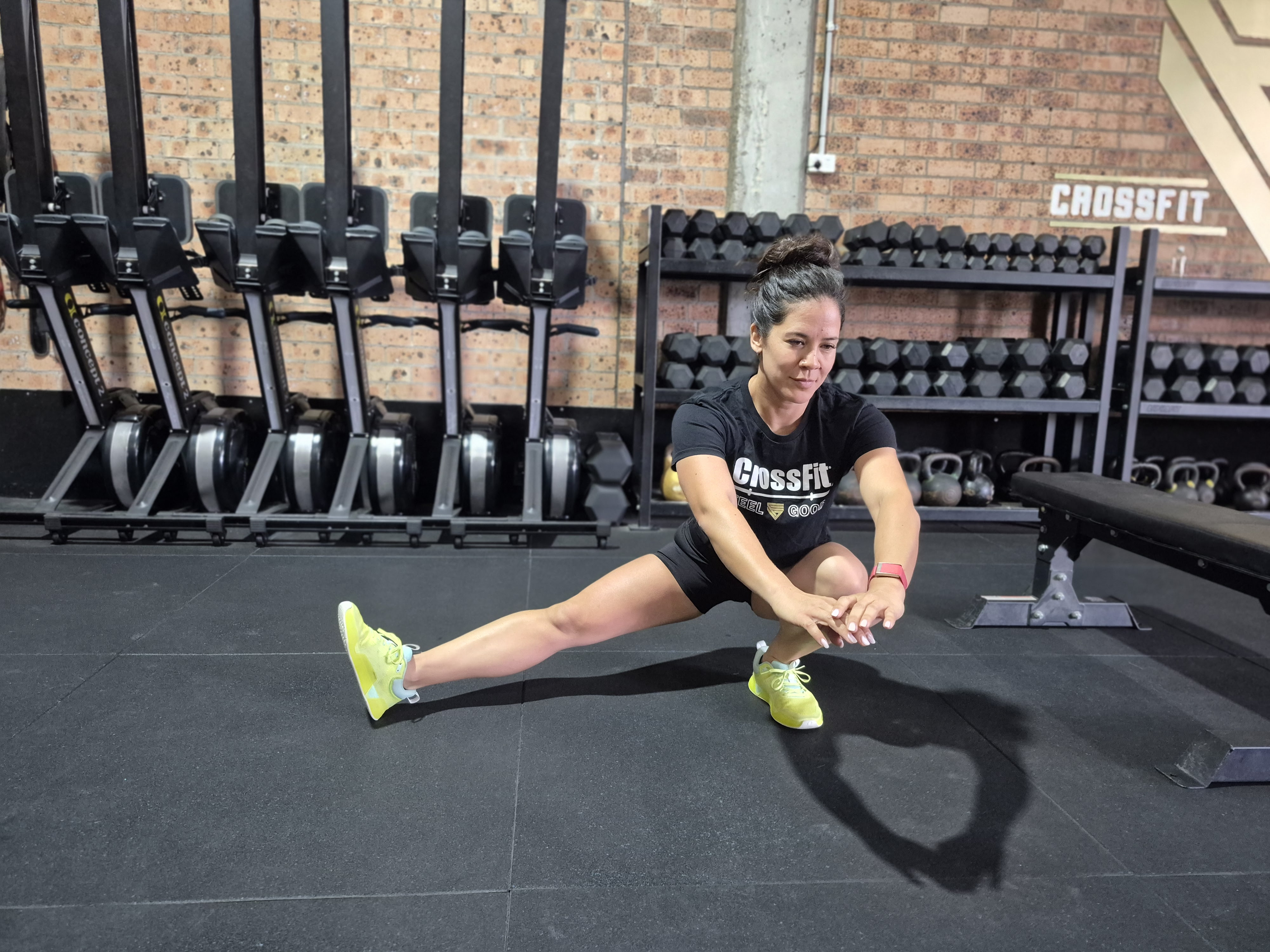
Finally, a drill that I love to prescribe for my field based or Home Exercise Program clients is the lateral lunge done on sliders. This allows anyone to scale the lateral lunge to their respective comfort level and range of motion with the added bonus that dragging the slider back in torches the adductors of the leg that’s displaced.
https://youtube.com/shorts/qRPCzmBRXO8?si=_Yv-K_yRYXkU_Sw1
Enjoy the extra confidence in your leg strength and hip stability the next time Bulgarians are programmed!
Coach Nick

.jpg)
.jpg)
.jpg)
.png)
.png)
(1)(1)(1).jpg)
.jpg)
.jpg)
.png)
(1).jpg)
.jpg)