By clicking “Accept All Cookies”, you agree to the storing of cookies on your device to enhance site navigation, analyze site usage, and assist in our marketing efforts. View our Privacy Policy for more information.
Recovering From a Lower Back Injury- When Can I get back to normal training?
This ultimate guide breaks down the real causes of lower back pain, why most issues start long before you ever step into the gym, and the simple self-tests you can use to assess readiness for lifting, prevent re-injury, and return to training safely and confidently with a strong, resilient spine.
By
November 17, 2025
.jpg)
Related

Lower Back Pain: What’s Really Going On Behind the Scenes
All of the coaches truly understand the initial (and at times ongoing) pain, dismay and frustration that occurs when a lower back injury occurs, especially when it’s not a quick thing to bounce back from. Lower back issues rarely come out of nowhere and they very rarely start in the gym. For most people, the spine has been quietly copping years of wear and tear long before a deadlift or squat ever enters the picture. Long hours sitting at a desk, repetitive bending picking up kids, awkward sleeping positions, old sports injuries, manual labour, weekend DIY projects, carrying added weight, even general deconditioning all add up. Over time, these habits create weaknesses, stiffness, and compensation patterns that only show themselves once you start training with proper structure and intensity. And that’s exactly why a smart, structured return-to-training plan matters.
The Blueprint I Use to Help Members Avoid Lower Back Re-Injuries
Whilst the lower back protocol that we’ve instilled at CFFG (comprising of The Lock 5 and Mcgill 3 - (all of these are up on the posters in the Open Gym Room), during the warm up is our go to for preparing your body for the day’s session to come. I’ve been aware of some members re-injuring or re-niggling their lower back during their training after a period of time when everything was feeling close to normal. This understandably produces a huge degree of frustration because you were doing all the right things. To help reduce these re-occurences I wanted to give you my blueprint that I’ve taken and developed from all the mentors and training partners that I’ve spent time with over the last 15 years. This blueprint is what quickly goes through my head when someone asks me, am I good to squat / deadlift / Clean / Snatch / Jump etc today.
Q1- Are you still waking up with a significant degree of lower back tension / stiffness, with the bonus question - Was it hard to put your shoes and socks in this morning?
If you answer yes and yes (and you’re recovering from a lower back injury that occurred during a heavy lift, I’m going to be putting the brakes on and adjusting any hinging to a split
stance / lunge variation. A healthy lower back should easily have sufficient mobility to flex when we put our shoes and socks on in the morning.
Q2) Can you handle compression?
There’s a very simple test to determine your spine’s ability to handle compression (a barbell on your back places a compressive load on the spine). This compression isn’t a bad thing (unless you’re recovering from a bad lower back injury) as this compression is exactly what we need to build bone density.
Sitting on a chair / bench, get both hands underneath the seat and pull directly up against gravity, whilst maintaining a neutral spine. If this elicits pain, you’re still too sensitive to handle the demands of barbell squatting/hinging.
https://youtube.com/shorts/VyXAWjRdQ8k?si=1zkboFcRY11ZPNEl
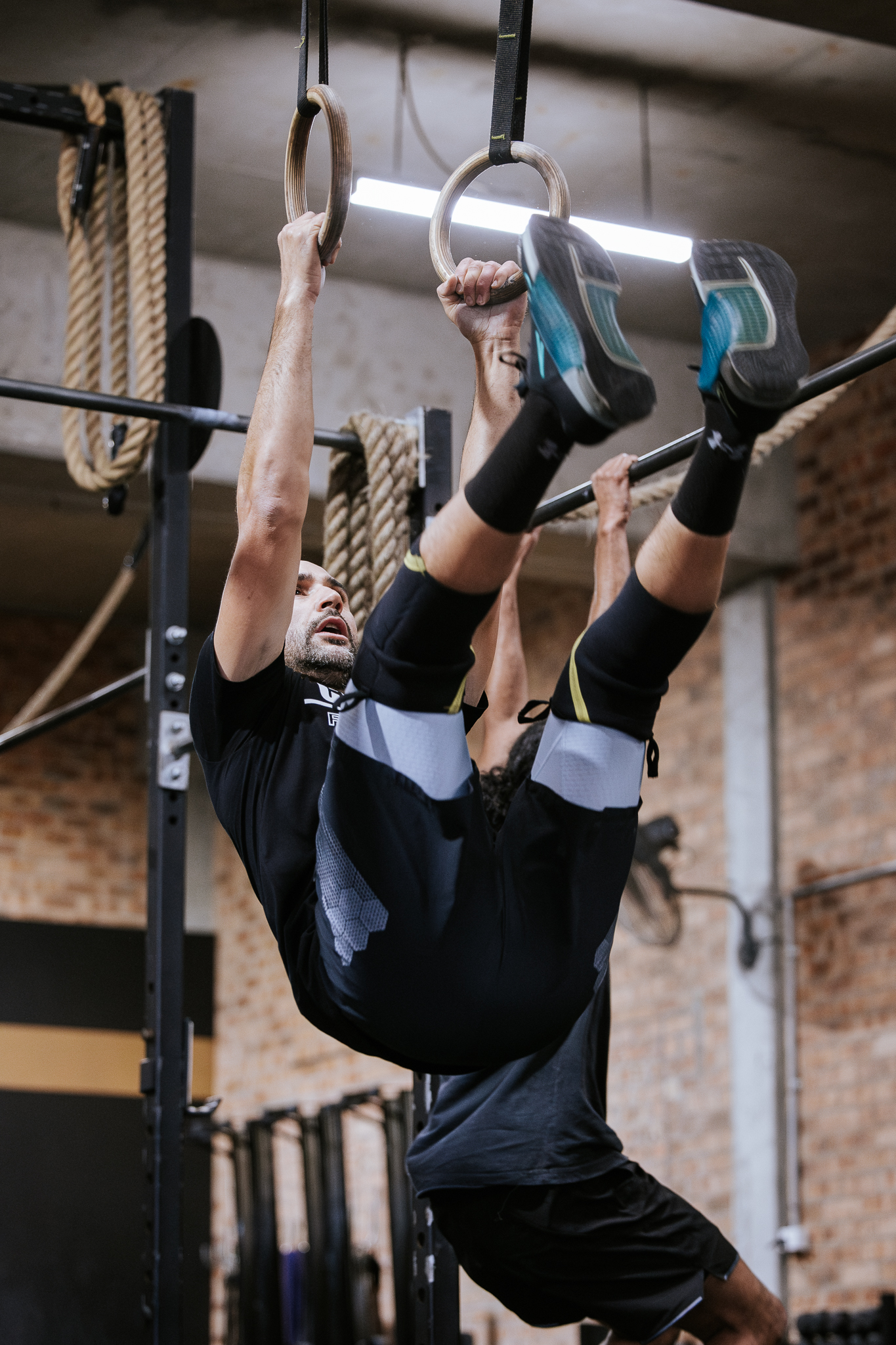
** Bonus tip for gymnastics movements - If kipping (whether it’s the arch (extension) or hollow (flexion) has caused you discomfort in the past and you’re wondering whether you’re ready to resume, perform this test in the previous irritated position (pull up on the bench in either an extended or flexed position). Pain free and you’re good to start!
Q3) Your Straight leg raise is a long way off 90 degrees
The straight leg raise is a better reflection of your neural tension in your sciatic nerve than a test of hamstring flexibility. After disc injury, SLR performance is an important proxy that a lot of clinicians use to assess how acute the injury is or how well the injury is recovering. A healthy sciatic nerve (ie minimal neural tension) should get very close to 90 degrees without much effort. This is also a very simple test to determine if certain movements irritate your symptoms- if your SLR has reduced during a training session, something in that session wasn’t appropriate.
To perform this test, lie on your back and lift one straight leg as high as you can without bending the knee or creating excessive curve in the lower back — ideally you should reach close to 90° comfortably, which indicates low neural tension and good readiness for training.
How to Know If Your Lower Back Is Ready for Training Again
Hopefully these 3 tests/diagnostics give you an easy framework to help gauge readiness for the lifts that demand a healthy/robust spine. Furthermore if you are aware that you’re coming to training with any of these still not quite where they need to be, please let us know so that we can design an effective and safe session!
Take the First Step Toward a Stronger, Pain-Free Back
If your lower back has been holding you back — whether it’s new, old, tight, or just frustrating — you don’t need to navigate it alone. Our coaching team is here to understand what’s going on, guide you through the next steps, and help you move forward safely and confidently. Book a free 30-minute session with us and we’ll take a look at your movement, chat about your goals, and point you in the right direction.
Coach Nick
.jpg)
.jpg)
.png)
.png)

(1)(1)(1).jpg)



.jpg)
.jpg)
.png)
(1).jpg)
.jpg)